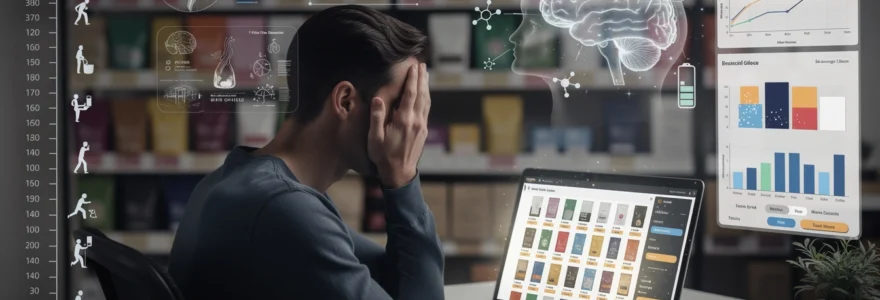
The modern consumer faces an unprecedented number of choices throughout their shopping journey. From selecting the perfect coffee blend among dozens of options to configuring a laptop with countless specifications, each decision demands mental energy. This cognitive burden, known as decision fatigue, significantly impacts purchasing behaviour and conversion rates across digital platforms. When shoppers encounter too many choices or complex decision-making processes, their mental bandwidth depletes, leading to delayed purchases, abandoned carts, or impulsive buying decisions that later result in buyer’s remorse.
Understanding decision fatigue has become crucial for retailers seeking to optimise their customer experience and maximise conversions. Research indicates that consumers make approximately 35,000 decisions daily, with shopping-related choices representing a substantial portion of this cognitive workload. As e-commerce platforms continue to expand their product catalogues and customisation options, the risk of overwhelming customers increases exponentially.
Cognitive load theory and choice overload in e-commerce environments
Cognitive Load Theory provides the foundational framework for understanding how information processing affects consumer decision-making. Developed by John Sweller, this theory explains how our working memory has limited capacity for processing new information simultaneously. In e-commerce contexts, every product option, feature comparison, and configuration choice adds to the consumer’s cognitive load, potentially pushing them beyond their processing threshold.
The principle of choice overload emerges when the number of available options exceeds a consumer’s capacity to evaluate them effectively. Barry Schwartz’s seminal research on the « paradox of choice » demonstrates that whilst some variety enhances satisfaction, excessive options create anxiety and decision paralysis. This phenomenon particularly affects online shopping environments where physical constraints don’t naturally limit product displays.
Paradox of choice: how amazon’s 50+ coffee options reduce conversion rates
Amazon’s coffee category exemplifies how extensive product ranges can inadvertently harm conversion rates. With over 50 distinct coffee options visible on initial search results, shoppers frequently experience analysis paralysis. Internal studies suggest that customers who encounter extensive product grids spend 40% more time browsing but convert at 23% lower rates compared to those presented with curated selections of 8-12 options.
The psychological impact intensifies when considering the temporal aspect of online shopping. Unlike physical stores where walking between aisles naturally creates breaks in decision-making, digital environments enable continuous choice exposure without cognitive respite. This sustained mental effort accelerates the onset of decision fatigue, particularly affecting customers during extended browsing sessions.
Mental bandwidth depletion through product configuration systems
Complex product configurators represent another significant source of cognitive strain in digital retail. Consider laptop customisation interfaces that require decisions across memory capacity, storage type, processor speed, graphics cards, and warranty options. Each configuration step demands working memory allocation, progressively depleting the consumer’s mental resources.
Research indicates that customers abandon configuration processes at a 34% higher rate when presented with more than six customisation categories simultaneously. The mental effort required to understand technical specifications and their implications creates substantial cognitive load, often resulting in customers defaulting to pre-configured options or abandoning the purchase entirely.
Cognitive processing models: system 1 vs system 2 Decision-Making frameworks
Daniel Kahneman’s dual-process theory distinguishes between System 1 (fast, automatic) and System 2 (slow, deliberate) thinking processes. In retail contexts, decision fatigue predominantly affects System 2 processing, which handles complex comparisons and analytical thinking required for purchase decisions. As mental resources deplete, consumers increasingly rely on System 1 shortcuts, leading to impulsive purchases or decision avoidance.
This shift has profound implications for e-commerce design. Websites that primarily engage System 2 thinking through detailed comparisons and complex interfaces tire users more quickly than those leveraging System 1 processes through visual cues, social proof, and simplified choice architecture. Understanding this distinction enables retailers to design experiences that minimise cognitive burden whilst maintaining informed decision-making.
Choice architecture manipulation in digital retail interfaces
Choice architecture—the context in which options are presented—significantly influences decision fatigue levels. Digital retailers increasingly employ nudge theory principles to guide consumer choices without restricting freedom of choice. Effective choice architecture
continues to reduce decision fatigue by limiting unnecessary choices, highlighting recommended products, and structuring information hierarchically. For example, presenting a small number of featured items above a larger catalogue, or pre-selecting the most common shipping option, nudges users toward efficient decisions without coercion. Poorly designed choice architecture, on the other hand, can overwhelm visitors with dense product grids, aggressive upsell modals, and unclear CTAs, accelerating mental exhaustion and increasing bounce rates.
Ethical manipulation of choice architecture focuses on aligning nudges with the shopper’s best interests. Labelling a mid-tier pricing plan as “Best Value”, auto-applying the most economical shipping by default, or surfacing relevant add-ons only when they genuinely enhance the core purchase all help customers conserve mental energy while still feeling in control. When retailers respect user autonomy and transparency, these subtle design choices build trust and long-term loyalty, rather than short-term gains followed by regret.
Neuroscientific evidence of decision fatigue impact on purchase behaviour
Beyond behavioural data, neuroscientific research offers compelling evidence that decision fatigue is rooted in measurable brain activity. Neuroimaging studies have shown that regions involved in self-control, conflict monitoring, and reward processing behave differently as people move through long sequences of choices. In online shopping environments, these neural changes manifest as slower decision times, stronger responses to default options, and heightened susceptibility to persuasive cues.
Understanding the brain mechanisms behind decision fatigue enables digital retailers to design shopping experiences that align with our biological constraints. Rather than treating low conversion rates or high cart abandonment as purely UX issues, marketers can recognise them as symptoms of depleted cognitive and neural resources. When we frame e-commerce optimisation in neuroscientific terms, it becomes clear that simpler, more focused purchase journeys are not just “nice to have”; they are a biological necessity.
Anterior cingulate cortex activity during extended shopping sessions
The anterior cingulate cortex (ACC) plays a central role in monitoring conflict, detecting errors, and allocating attention during complex decisions. In extended shopping sessions, especially those involving many similar product comparisons, the ACC is repeatedly engaged as consumers weigh trade-offs between price, features, and social proof. fMRI studies suggest that as decision sequences lengthen, ACC activation patterns shift from efficient, focused bursts to more diffuse and strained activity.
This neural strain correlates with the subjective feeling of being “mentally drained” after browsing too many product pages. When the ACC becomes overloaded, consumers struggle to resolve conflicts between near-identical options, leading to choice paralysis or over-reliance on heuristics such as “pick the cheapest” or “choose the brand you recognise”. By limiting the number of decisions per page and clarifying value differentials, retailers can reduce the neural conflict the ACC must manage, keeping shoppers cognitively fresher for final purchase steps.
Dopamine depletion patterns in sequential product evaluations
Dopamine, often referred to as the “motivation molecule”, is closely tied to reward anticipation and the willingness to continue effortful tasks. During the early stages of a shopping journey, dopamine levels typically rise as consumers anticipate finding the “perfect” product or a great deal. However, when users are forced to evaluate endless variants or navigate cluttered interfaces, this repeated evaluation without clear reward can dampen dopamine responses.
Neuroscientific models of sequential decision-making show that as dopamine signalling decreases, our motivation to continue investing mental effort declines as well. In practical terms, this means long comparison sessions with no obvious “win” can cause shoppers to disengage, abandon their carts, or switch platforms entirely. Structuring purchase flows so that users experience small, early “wins” (for example, quickly finding a highly rated match or unlocking a visible discount) helps sustain dopamine-driven motivation throughout the buying process.
Glucose consumption studies: roy baumeister’s self-control research applications
Roy Baumeister’s research into self-control and ego depletion highlights the metabolic cost of decision-making. Complex choices and self-regulation draw on glucose, the brain’s primary energy source, and as glucose levels fall, our ability to exert self-control and make careful decisions declines. In controlled experiments, participants required to make long sequences of choices showed reduced persistence on subsequent tasks, a pattern directly linked to glucose depletion.
Translating this into e-commerce environments, every additional filter, comparison, or configuration option consumes a small portion of the shopper’s limited metabolic resources. When users shop at the end of a workday or while multitasking, their baseline glucose levels are often already low, making them especially vulnerable to decision fatigue. Retailers can respond by shortening paths to purchase, using pre-selected bundles, and reducing the number of mandatory decisions during checkout, thereby conserving the user’s limited metabolic budget for the decisions that truly matter.
Fmri analysis of consumer brain activity during choice overwhelm
Functional MRI studies of consumers confronted with overwhelming product assortments consistently show heightened activity in brain regions associated with stress and anxiety, such as the amygdala and insula. At the same time, areas responsible for long-term planning and value integration, including regions of the prefrontal cortex, show diminished activation when choice sets become excessive. This neural pattern reflects a shift from thoughtful evaluation toward emotional avoidance.
In one oft-cited experiment, participants asked to choose from a large assortment of similar items displayed increased neural markers of stress and reduced satisfaction with their final choice compared to those given a smaller set. For online retailers, this means that pushing ever-larger catalogues onto a single screen can literally push shoppers into a neurobiological state where abandoning the session feels like the most rewarding option. By constraining visible options and guiding users step-by-step, we help keep prefrontal regions engaged and prevent the emotional brain from taking over in counterproductive ways.
Quantitative analysis of decision fatigue metrics in retail analytics
While neuroscience provides the “why” behind decision fatigue, analytics provides the “where” and “how much” within your own customer journeys. Retailers can track specific behavioural metrics that signal cognitive overload, such as time-on-page spikes without corresponding increases in add-to-cart events, frequent back-and-forth navigation between similar product pages, and sudden drop-offs late in checkout flows. When these patterns cluster around particular pages or steps, they often indicate that shoppers are hitting their cognitive limits.
Advanced analytics platforms allow you to segment this decision fatigue data by device, traffic source, and time of day. For instance, you may discover that mobile users browsing large catalogues during evening hours have significantly higher bounce rates from category pages than desktop users in the morning. Heatmaps, scroll maps, and funnel analyses can be combined to pinpoint exactly where cognitive friction accumulates. From there, A/B testing of choice reduction strategies—such as simplified filters, fewer visible options, or clearer “best choice” indicators—can quantitatively reveal how much reducing decision load lifts your conversion rate.
Strategic implementation of choice reduction methodologies
Implementing choice reduction does not mean stripping away valuable options; it means timing and presenting those options in a way that aligns with how humans actually think. Effective strategies focus on progressive disclosure, intelligent filtering, and well-optimised defaults that reduce the number of active decisions a shopper must make at any given moment. When executed carefully, these methods preserve perceived variety while dramatically easing the mental load of online shopping.
Digital retailers can borrow principles from platforms such as Shopify, WooCommerce, Netflix, and Stitch Fix, all of which have developed sophisticated systems to manage vast assortments without overwhelming users. By combining UX design best practices with behavioural science, you can turn decision fatigue from a hidden conversion killer into a managed variable within your optimisation toolkit. The following subsections explore concrete approaches you can apply across your product and checkout experiences.
Progressive disclosure techniques in shopify and WooCommerce platforms
Progressive disclosure is a design strategy that reveals information and options gradually, rather than all at once. On Shopify and WooCommerce stores, this often means starting with a simple, high-level choice—such as product category or primary use case—and only then exposing more detailed filters or configuration controls. By sequencing decisions from broad to specific, you help shoppers focus on one manageable choice at a time instead of juggling dozens simultaneously.
For example, a WooCommerce fashion store might first ask users to choose between “Workwear”, “Casual”, and “Occasion” before showing size, colour, and fabric options. Similarly, a Shopify electronics retailer can hide advanced technical filters behind an “Advanced options” toggle, visible only to users who actively seek deeper control. This approach keeps the main interface clean for most buyers while still supporting power users, reducing overall cognitive load and minimising the risk of early-session overwhelm.
Smart filtering algorithms: netflix’s recommendation engine principles
Netflix’s recommendation engine is a masterclass in reducing perceived choice overload across enormous catalogues. Instead of presenting a flat grid of thousands of titles, Netflix uses machine learning algorithms to surface a small number of highly relevant rows, each tailored to the user’s viewing history and implicit preferences. This creates the illusion of curated choice, where every option appears to be “already pre-filtered” for the viewer’s taste.
E-commerce platforms can apply similar smart filtering algorithms to product discovery. By leveraging browsing history, purchase behaviour, and contextual signals (such as location or device), you can dynamically reorder and refine product listings so that the most relevant items appear first. This not only shortens the path to a satisfactory choice but also reduces the mental effort of sifting through irrelevant products. In practical terms, using recommendation principles inspired by Netflix can transform an overwhelming category page into a personalised shortlist that feels easier and more enjoyable to shop.
Default option optimisation using nudge theory applications
Defaults are one of the most powerful tools in the choice reduction toolkit because many fatigued customers simply accept pre-selected options. Nudge theory suggests that carefully chosen defaults can steer behaviour in predictable ways without removing freedom of choice. In online retail, defaulting to a mid-tier plan, a popular colour, or standard shipping can streamline decisions for most users while still allowing others to customise their choices.
To optimise defaults ethically, you should base them on aggregated customer data and genuine value rather than short-term profit maximisation. For instance, if analytics show that 70% of satisfied customers choose a particular configuration, making that combination the default helps new shoppers avoid unnecessary deliberation. By clearly labelling these defaults as “Recommended” or “Most popular”, you give System 1 thinking a trustworthy shortcut, especially when System 2 resources are running low.
Curated selection models: stitch fix’s personal styling algorithm
Stitch Fix offers a striking example of how curated selection models can almost eliminate decision fatigue. Instead of forcing customers to scroll through hundreds of garments, the service asks a series of preference questions and then uses human stylists plus algorithms to deliver a limited set of handpicked items. The customer’s main decision becomes “keep or return” for each curated piece, rather than “which of these 500 products should I start with?”.
Retailers in other categories can adapt this model by offering guided quizzes, style profiles, or “build your box” flows that narrow the universe of options before presenting them. Subscription boxes, bundled product sets, and “starter kits” all act as curated shortcuts through large catalogues. By moving the complexity behind the scenes and presenting shoppers with a small, highly relevant selection, you dramatically reduce decision fatigue while often increasing average order value and satisfaction.
Temporal decision fatigue patterns throughout customer purchase journeys
Decision fatigue is not static; it fluctuates over time and across stages of the customer purchase journey. The same shopper may feel energised and analytical at the start of the day but impulsive and avoidant by evening. Similarly, a user might begin a session excited to explore options but become progressively more depleted as they move from discovery to comparison to checkout. Mapping these temporal decision fatigue patterns helps retailers tailor experiences to the user’s likely state of mind at each moment.
By aligning content density, required inputs, and persuasive messaging with these temporal patterns, you can support customers when their mental resources are high and protect them when those resources are low. For example, it may be wise to encourage wishlist creation or email capture early in high-fatigue sessions, allowing users to return later when they have more bandwidth to complete purchases. The following subsections explore how time of day, session length, and multi-visit behaviour intersect with decision fatigue.
Morning vs evening shopping behaviour: chronotype impact analysis
Chronotype research shows that people have natural peaks and troughs in cognitive performance throughout the day. In general, many consumers exhibit higher self-control and analytical capacity in the morning, with attention and willpower declining as the day progresses. Analytics from major retailers often confirm that complex purchases—such as financial products or high-ticket electronics—are more likely to be completed earlier in the day, while late-night browsing skews toward low-effort, entertainment-driven shopping.
For marketers, this suggests tailoring campaign timing and on-site experiences to these patterns. You might promote in-depth buying guides and comparison tools in morning email campaigns, when users are better equipped to process detailed information. In the evening, simplifying interfaces, surfacing previously saved items, and emphasising frictionless checkout can help counteract heightened decision fatigue. By respecting chronotype-driven differences instead of assuming a uniform shopper mindset, you reduce the cognitive mismatch that leads to abandoned carts.
Multi-session purchase abandonment correlation studies
Many online purchases, particularly in considered categories like furniture, travel, or B2B software, unfold over multiple sessions. While multi-session behaviour is often a sign of careful research, it can also indicate that decision fatigue is interrupting the path to purchase. Studies tracking user cohorts over time have found that the probability of completing a purchase declines after a certain number of revisit cycles, especially when each session reintroduces the full complexity of choices from scratch.
To mitigate this, retailers can design experiences that reduce the cognitive cost of resuming a decision. Saving carts, preserving filter settings, and providing clear “Recently viewed” sections help shoppers pick up where they left off without redoing previous mental work. Email reminders that summarise past activity (“You looked at these 3 laptops—here’s how they compare”) shift some of the cognitive effort from the user to the retailer. By smoothing transitions between sessions, you reduce the likelihood that accumulated decision fatigue will push the shopper to abandon the purchase entirely.
Peak decision exhaustion points in extended browse sessions
Within a single visit, there are often predictable points at which decision exhaustion peaks. These might include the moment a user has compared several similar items without making progress, the transition from product selection to account creation, or the introduction of unexpected add-ons and fees in the checkout. Session replay tools and funnel analyses can reveal where users start hesitating, scrolling aimlessly, or bouncing at higher-than-average rates.
Once you identify these inflection points, you can redesign them specifically to counteract decision fatigue. This might involve simplifying forms, reducing the number of fields, pre-filling known information, or postponing non-essential decisions (such as newsletter sign-ups) until after the purchase is complete. Think of it like removing hurdles from the final stretch of a race: the closer users get to the finish line, the less cognitive resistance they should encounter. By consciously engineering low-friction experiences at peak exhaustion moments, you give customers the best chance of crossing the conversion finish line with confidence rather than collapse.