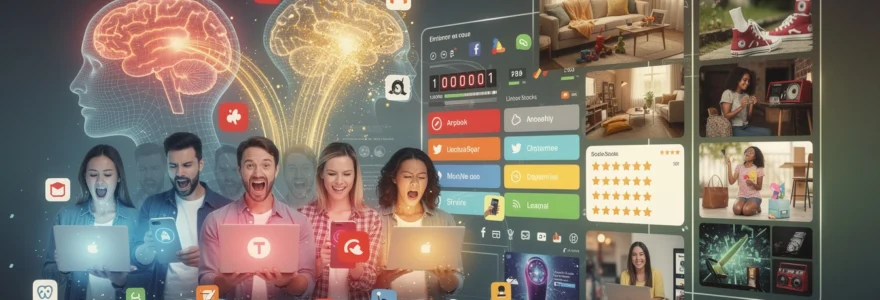
Every purchase decision carries an emotional signature, often invisible to the conscious mind but powerfully influential in shaping behaviour. From the dopamine rush of adding items to an online cart to the anxiety triggered by « only 2 left in stock » warnings, emotions orchestrate the complex dance between desire and action. Understanding these psychological mechanisms has become essential for brands seeking to connect authentically with audiences in an increasingly saturated marketplace. The science behind emotional triggers reveals that rational justifications typically follow emotional commitments, not the other way around. This neurological reality challenges traditional marketing assumptions and opens pathways to more effective consumer engagement strategies.
Modern neuroscience has demonstrated that the human brain processes emotional information faster than rational data, creating immediate responses that precede logical analysis. When you encounter a brand message or product display, your limbic system evaluates the emotional significance before your prefrontal cortex engages in deliberate consideration. This temporal sequence explains why emotionally resonant campaigns consistently outperform purely informational approaches, even when the latter contains objectively superior product details. The implications for marketing strategy are profound, suggesting that emotional architecture should form the foundation of consumer communications rather than serving as decorative enhancement.
Neuroscience behind emotional Decision-Making in consumer psychology
The neural pathways governing consumer behaviour operate through interconnected brain regions that process emotional, social, and reward-related information simultaneously. Research using functional magnetic resonance imaging has revealed that brand preferences activate the same neural circuits associated with personal identity and self-concept, suggesting that consumer choices function as expressions of who you believe yourself to be. This neurological integration explains why brand loyalty often resists logical arguments about price or features—the emotional investment transcends transactional considerations and becomes intertwined with self-perception.
The role of the limbic system in purchase decisions
The limbic system, comprising structures including the hippocampus, amygdala, and cingulate cortex, serves as the emotional command centre during purchase evaluations. When you encounter a potential purchase opportunity, your limbic system immediately assesses the emotional valence—whether the experience feels positive, negative, or neutral. This assessment happens within milliseconds, establishing an emotional baseline that subsequent rational analysis struggles to overcome. Brands that successfully engage limbic structures create visceral connections that transcend product features, establishing emotional anchors that influence future purchasing behaviour.
Memory formation during shopping experiences relies heavily on limbic system activation, with emotionally charged moments creating stronger neural traces than neutral interactions. This neurological principle explains why experiential marketing generates disproportionate impact compared to passive advertising exposure. When you participate in a brand experience that triggers positive limbic responses, your brain encodes the memory with enhanced detail and accessibility, making future recall more likely during purchase consideration. The emotional context becomes inseparably linked with the brand identity, creating associative networks that activate automatically when you encounter related cues.
Dopamine release patterns during brand interactions
Dopamine, often mischaracterized as a pleasure chemical, actually functions as a motivational signal that directs attention and effort towards rewarding outcomes. When you anticipate receiving something valuable—whether a discount, a new product, or social recognition—your brain releases dopamine in expectation of the reward, not just in response to receiving it. This anticipatory mechanism explains why marketing campaigns that create suspense or build towards reveals generate heightened engagement compared to immediate gratification approaches. The neurochemical anticipation becomes pleasurable in itself, extending the emotional experience beyond the transaction moment.
Variable reward schedules, familiar from gaming and social media contexts, leverage dopamine pathways with remarkable effectiveness in consumer settings. When you cannot predict exactly when or what reward will arrive, dopamine neurons maintain elevated firing rates, sustaining motivation and attention over extended periods. Loyalty programs that incorporate surprise bonuses or randomized rewards exploit this neurological pattern, creating more persistent engagement than predictable point accumulation systems. The uncertainty itself becomes rewarding, as your brain remains in a heightened anticipatory state that encourages continued participation and brand interaction.
Amygdala activation and risk perception in buying behaviour
The amygdala processes threat-related information and generates emotional responses to perceived risks, playing a crucial role in purchase decisions involving uncertainty or potential loss. When you evaluate an unfamiliar brand or contemplate a significant expenditure, amygdala activation increases, creating feelings of caution or anxiety that can inhibit purchase completion.
To counteract this defensive response, effective brands provide clear risk-reduction signals such as guarantees, free returns, social proof, and transparent pricing. These cues help the amygdala “stand down,” reducing perceived threat and making it easier for your rational brain to approve the purchase. Conversely, aggressive or confusing sales tactics can heighten amygdala activation, triggering avoidance and cart abandonment even when the offer is objectively attractive. Understanding how fear circuits operate allows marketers to design journeys that feel safe, predictable, and trustworthy rather than pressured or opaque.
Interestingly, the amygdala does not only respond to danger; it also flags opportunity. Limited-time offers, early-access deals, or exclusive drops can simultaneously stimulate desire and risk awareness—consumers fear both missing out and making a mistake. The brands that win are those that balance this tension, using emotional triggers like urgency while pairing them with reassurance signals, clear information, and consistent brand integrity.
Mirror neurons and empathetic marketing response
Mirror neurons, first identified in primate studies, fire both when you perform an action and when you observe someone else performing that action. In consumer psychology, this means that watching someone enjoy a product can partially recreate that emotional and sensory experience in your own brain. When an advert shows a family sharing a meal, a runner crossing a finish line, or a person unboxing a long-awaited package, your mirror neuron system helps you “feel” that moment, even though you are only a spectator.
This neurological mirroring is why empathetic, story-driven marketing is so powerful. When campaigns feature relatable characters, everyday scenarios, and authentic emotional reactions, audiences unconsciously simulate those states. You are not just seeing a product; you are rehearsing the pleasure, pride, or relief associated with owning it. Brands that deliberately design for empathetic resonance—through video, user-generated content, and testimonial storytelling—capitalize on this mechanism to deepen emotional engagement and increase the likelihood of purchase.
Fear-based triggers and scarcity marketing tactics
Fear-based triggers and scarcity tactics harness deeply rooted survival mechanisms that evolved to help humans prioritize scarce resources and avoid loss. In digital commerce, these mechanisms appear as countdown timers, “only X left” prompts, and exclusive access messaging that tap into fear of missing out and loss aversion. When handled carefully, these tools can accelerate decision-making and improve conversion rates; when overused or manipulated, they erode trust and brand equity.
For marketers, the challenge is to employ scarcity marketing tactics that respect consumer autonomy while acknowledging that emotional triggers influence consumer choices more than we often admit. Ethical scarcity is grounded in genuine constraints—limited stock, seasonal availability, or time-bound promotions—rather than artificial pressure. When you align these tactics with real value and transparent communication, you create urgency without tipping into manipulation.
FOMO implementation in amazon prime day campaigns
Amazon Prime Day provides a textbook example of large-scale FOMO (fear of missing out) implementation in action. The event compresses thousands of deals into a short time window, combining limited-time discounts with lightning deals that expire or sell out within hours or even minutes. This structure is designed to trigger urgency and competitive arousal, encouraging you to act now rather than postpone the decision.
Psychologically, Prime Day exploits multiple emotional triggers at once: exclusivity (only Prime members can access deals), social proof (constant promotion and media coverage), and scarcity (visible stock depletion and time pressure). You are not merely evaluating whether you need a product; you are deciding whether you are willing to risk missing a “once-a-year” opportunity. Marketers in other sectors can borrow this framework on a smaller scale, using event-based campaigns and members-only drops to create similar FOMO effects—provided the promised value is real and not just cosmetic discounting.
Loss aversion theory by kahneman and tversky in e-commerce
Loss aversion, a cornerstone of behavioural economics introduced by Daniel Kahneman and Amos Tversky, states that people experience the pain of loss more intensely than the pleasure of an equivalent gain. In e-commerce, this means you are often more driven to avoid losing a discount, free shipping, or reserved item than you are to gain an additional benefit. Framing offers in terms of what the customer stands to lose if they do not act can therefore be more persuasive than highlighting potential gains.
Consider abandoned cart emails that warn, “Your items are selling fast” or “Your discount expires at midnight.” These messages activate loss aversion by positioning inaction as a forfeiture of value you already “own” psychologically. Similarly, limited-time free returns or introductory pricing can be framed as benefits that will be lost if the customer waits too long. The most effective implementations combine this framing with clarity and respect, avoiding exaggerated claims that would undermine credibility once the shopper realizes the scarcity was overstated.
Countdown timers and urgency-driven conversion optimisation
Countdown timers are visual embodiments of urgency, turning an abstract deadline into a concrete, constantly changing stimulus. Neuroscientifically, they heighten arousal and narrow attentional focus, making it harder for you to disengage from the decision at hand. This is why you often see timers on checkout pages, early-bird pricing offers, or limited-time webinars—each second that passes subtly increases psychological pressure to act.
However, not all timers are created equal. When they are genuine—linked to real inventory limits or event start times—they can help customers prioritize decisions and feel confident they are making timely choices. When they reset arbitrarily on every visit, they create cognitive dissonance and long-term distrust. To optimise conversion ethically, brands should pair timers with clear explanations (“Price increases when the new collection drops” or “Seats are limited by live support capacity”) so that urgency feels like a service, not a trap.
Limited stock notifications on booking.com and expedia platforms
Travel platforms like Booking.com and Expedia have refined limited stock notifications into powerful behavioural nudges. Phrases such as “Only 1 room left at this price,” “In high demand—booked 12 times in the last 24 hours,” or “5 people are looking at this property” activate scarcity and social proof simultaneously. As a user, you are reminded that your preferred option could disappear at any moment, intensifying the emotional stakes of delay.
These notifications exploit a key aspect of human psychology: when choices are abundant, we procrastinate; when a desired option appears fragile, we move quickly. Yet regulators and consumer advocates have increasingly scrutinised misleading scarcity claims, pushing platforms to ensure that stock and demand indicators are accurate. For brands outside travel, the lesson is clear: limited availability messaging can be highly effective, but it must be grounded in verifiable data and used sparingly to maintain credibility.
Social proof mechanisms and herd behaviour psychology
Social proof mechanisms leverage our innate tendency to look to others for guidance when making uncertain decisions. Herd behaviour psychology suggests that, especially in ambiguous situations, we assume that the crowd knows something we do not, so we follow their lead. In digital environments, reviews, ratings, testimonials, and visible engagement metrics become proxies for that crowd wisdom, shaping our sense of safety and desirability around a purchase.
When you see thousands of positive reviews or a product tagged as a bestseller, you experience a subtle but powerful reassurance that reduces perceived risk. Emotional triggers influence consumer choices here by transforming isolated decisions into socially validated actions: you are not just buying a product; you are joining a community of people who have made the same choice. This sense of belonging can be as influential as the product’s functional attributes.
User-generated content impact on trustpilot and reviews.io
Platforms like Trustpilot and Reviews.io institutionalise user-generated content as a core element of brand reputation. Unlike polished brand storytelling, reviews feel raw and unscripted, providing what appears to be an unfiltered window into real customer experiences. When you read detailed feedback—both praise and criticism—you are engaging in vicarious trial, emotionally simulating what it might feel like to buy, own, or regret a purchase.
From a marketing perspective, encouraging satisfied customers to share their stories amplifies positive emotional triggers at scale. Rich narratives about how a product solved a problem, exceeded expectations, or contributed to a meaningful life event carry more persuasive weight than generic claims. Brands that respond transparently to negative reviews further reinforce trust, signalling that they are listening and committed to improvement rather than curating only positive sentiment.
Influencer marketing through parasocial relationships
Influencer marketing taps into parasocial relationships—one-sided emotional bonds that audiences form with public figures they follow online. Even though you may never meet an influencer, repeated exposure to their content can make them feel like a friend or trusted advisor. When they recommend a product, your brain often processes this as advice from a familiar, credible source rather than a formal advertisement.
This dynamic magnifies emotional triggers: if an influencer you admire expresses excitement, relief, or confidence about a purchase, you are more likely to mirror those emotions and transfer them to the brand. The most effective influencer campaigns preserve authenticity by aligning products with the influencer’s genuine interests and values. When endorsements feel forced or inconsistent with their usual behaviour, the parasocial bond weakens, and the recommendation loses its persuasive power.
Bandwagon effect in viral product launches
The bandwagon effect describes our tendency to adopt behaviours or products simply because many others have done so. Viral product launches—whether a trending gadget, a limited-edition sneaker, or a suddenly popular beverage—often owe their success less to initial advertising spend and more to visible momentum. As social feeds fill with unboxings, reviews, and memes, the perception that “everyone is buying this” becomes a compelling emotional trigger.
For consumers, joining the bandwagon can satisfy multiple needs at once: belonging, status, curiosity, and even relief from decision fatigue (“If it’s this popular, it must be good enough”). Brands can catalyse this effect by seeding early demand with micro-influencers, loyal communities, and exclusive pre-launch access that makes later adopters feel they are arriving at an established trend rather than taking a risk on something untested.
Celebrity endorsement psychology in nike and apple campaigns
Nike and Apple have long exemplified strategic use of celebrity endorsements to embody aspirational identities. When Nike partners with elite athletes or Apple features creative leaders, they are inviting you to associate their products with excellence, innovation, and cultural relevance. The underlying psychology is straightforward: if people you respect and admire choose these brands, adopting them brings you psychologically closer to that admired status.
These campaigns work because they go beyond simple product placement. Nike’s “Just Do It” and Apple’s “Think Different” messages link their offerings to universal emotional themes—courage, creativity, and self-expression—that transcend any single celebrity. You are not merely buying shoes or a smartphone; you are buying into a narrative about who you want to be. When emotional triggers influence consumer choices this strongly, price and features become secondary to the identity promise embedded in the brand.
Nostalgia marketing and Memory-Driven consumer engagement
Nostalgia marketing leverages the emotional warmth of past experiences to create positive associations with present-day products. Because the hippocampus and limbic system encode emotionally charged memories more robustly than neutral ones, cues that evoke childhood, formative years, or “simpler times” can instantly colour your perception of a brand. A familiar jingle, retro packaging, or revived product line can transport you back to a moment when life felt safer, happier, or more carefree.
Brands across FMCG, fashion, and entertainment increasingly use nostalgia-driven campaigns to cut through digital noise. Limited-edition throwback designs, reboots of classic flavours, or collaborations with legacy franchises tap into long-standing emotional connections that are difficult for new entrants to replicate. When you feel that a brand “remembers” your past, you are more inclined to reward it with loyalty in the present, even if competing products offer marginally better value or features.
Colour psychology and emotional brand positioning strategies
Colour psychology explores how different hues evoke distinct emotional responses and influence perception, often at a subconscious level. In branding, colour is not merely an aesthetic choice; it serves as a rapid, non-verbal signal of positioning and personality. For instance, blue is commonly associated with trust, stability, and competence, which is why it dominates sectors like finance and technology, while red signals energy, urgency, and excitement, making it popular for sales promotions and fast-food brands.
When you encounter consistent colour usage across packaging, websites, and advertising, your brain starts to build automatic associations between that palette and the brand’s emotional promise. Warm tones can suggest approachability and spontaneity, while cool tones convey calm, professionalism, or premium status. By aligning colour choices with the specific emotional triggers they want to activate—reassurance, excitement, sophistication—marketers can subtly steer first impressions and reinforce desired brand narratives before a single word is read.
Personalisation algorithms and emotional data mining techniques
Personalisation algorithms analyse vast amounts of behavioural data to infer your preferences, predict your needs, and deliver tailored experiences. From recommended products to dynamic homepage layouts, these systems aim to make you feel understood and uniquely served. When done well, this creates a sense of convenience and recognition—two emotional triggers that strongly influence consumer choices in crowded digital environments.
Behind the scenes, emotional data mining techniques track not only what you click or buy but also how long you linger on certain content, which images you zoom in on, and what times of day you are most responsive. By interpreting these signals, brands can infer emotional states such as curiosity, hesitation, or excitement and adjust messaging accordingly. For example, a user frequently browsing wellness content late at night might receive more supportive, reassuring language, while a user engaging with competitive sports gear might see bolder, achievement-oriented prompts.
However, the power of emotional personalisation comes with ethical responsibilities. Excessively granular targeting or opaque data practices can trigger discomfort and distrust, undermining the very loyalty they aim to build. Transparent consent processes, clear value exchange (“We use your data to recommend better deals”), and options to dial down personalisation help ensure that emotional triggers are used to enhance, not exploit, the customer experience. In an era where data is abundant, the brands that will thrive are those that pair algorithmic precision with human empathy and respect.