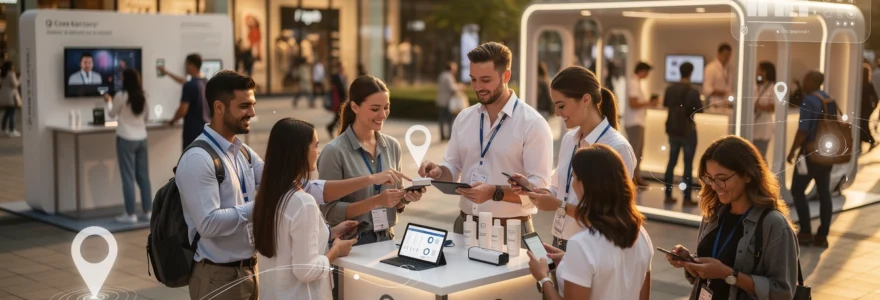
Field marketing represents a paradigm shift from traditional advertising methods, placing brands directly in front of their target audiences through strategic face-to-face interactions. This approach transcends the limitations of digital channels by creating tangible, memorable experiences that forge genuine connections between businesses and potential customers. In an era where consumers are increasingly skeptical of conventional advertising, field marketing offers authenticity through personal engagement and real-time relationship building.
The strategic importance of field marketing lies in its ability to break through the noise of saturated digital channels whilst providing immediate feedback and measurable results. Modern consumers crave authentic experiences and personal connections with brands, making field marketing an essential component of comprehensive marketing strategies. This direct engagement methodology enables businesses to gather valuable customer insights, demonstrate product value proposition effectively, and build trust through personalised interactions that simply cannot be replicated through digital means alone.
Experiential marketing strategies for customer engagement
Experiential marketing within field operations focuses on creating immersive brand experiences that engage multiple senses and emotional touchpoints. This approach transforms passive audiences into active participants, fostering deeper connections between consumers and brands. The methodology emphasises storytelling through interactive experiences, allowing potential customers to understand product benefits through direct engagement rather than traditional promotional messaging. Successful experiential strategies incorporate elements of surprise, education, and entertainment to create lasting impressions that influence purchasing decisions long after the initial interaction concludes.
Brand activation events and product demonstrations
Brand activation events serve as powerful platforms for showcasing product capabilities whilst creating memorable customer experiences. These carefully orchestrated gatherings allow businesses to demonstrate value propositions in controlled environments where potential customers can interact with products directly. Professional demonstration techniques include hands-on trial opportunities, expert-led tutorials, and comparative analysis sessions that highlight competitive advantages. The effectiveness of these events depends on meticulous planning, strategic venue selection, and skilled presenters who can adapt their approach based on audience feedback and engagement levels.
Product demonstrations within activation events provide tangible proof of concept, addressing customer concerns and objections in real-time. This direct interaction model enables immediate clarification of product features, pricing structures, and implementation processes. The personal nature of these demonstrations builds trust through transparency, allowing potential customers to make informed decisions based on actual experience rather than marketing claims.
Interactive pop-up experiences and temporary installations
Pop-up experiences represent dynamic marketing environments that capture attention through novelty and exclusivity. These temporary installations create urgency and excitement, encouraging immediate engagement from passersby who might otherwise ignore traditional advertising formats. Strategic placement in high-traffic areas maximises exposure whilst targeted timing aligns with consumer behaviour patterns and seasonal purchasing trends. The temporary nature of pop-ups generates buzz through social media sharing, extending reach beyond physical attendees.
Interactive elements within pop-up installations might include virtual reality demonstrations, customisation stations, or gamified experiences that encourage participation. These engaging activities create shareable moments that amplify brand visibility through user-generated content. The design and execution of pop-up experiences require careful consideration of space utilisation, traffic flow management, and technology integration to ensure smooth operations and positive customer interactions.
Sampling campaigns and trial-based marketing initiatives
Product sampling represents one of the most effective field marketing techniques for driving trial and conversion rates. This approach removes barriers to purchase by eliminating financial risk for consumers whilst demonstrating product quality directly. Sampling campaigns work particularly well for consumable products, beauty items, and technology solutions where experience drives purchasing decisions. Strategic sampling locations include retail environments, events, and high-traffic public spaces where target demographics congregate naturally.
Trial-based initiatives extend beyond simple sampling to include extended use periods, money-back guarantees, or freemium service offerings. These programmes build confidence in product quality whilst generating valuable usage data and customer feedback. The success of sampling campaigns depends on proper timing, adequate sample sizes, and follow-up mechanisms that convert trial experiences into sales opportunities.
Guerrilla marketing tactics for maximum brand exposure
Guerrilla marketing employs unconventional tactics to create maximum impact with minimal budgets through creativity and strategic surprise elements. These campaigns rely on innovative thinking rather than substantial financial investment, making them accessible to businesses of all sizes. Effective guerrilla tactics include flash mobs, street art installations, unexpected product placements, and interactive public stunts that generate organic media coverage. The key to successful guerrilla marketing lies in understanding local regulations, cultural sensitivities
and alignment with brand values, ensuring that disruptive tactics generate positive attention rather than controversy. When executed thoughtfully, guerrilla activations can achieve viral reach, turning everyday environments into high-impact brand touchpoints that customers remember and talk about long after the campaign ends.
Location-based customer targeting and geofencing technologies
Location-based targeting enhances field marketing by ensuring that brand interactions happen in the right place, at the right time, and with the right audience. Rather than relying on broad demographics alone, modern teams use geofencing, beacons, and GPS data to deliver hyper-relevant experiences to nearby customers. This approach allows marketers to align field activity with real-world customer behaviour, from in-store browsing patterns to event attendance. Used correctly, location-based tools turn every physical environment into a highly optimised stage for direct customer engagement.
Proximity marketing through beacon technology implementation
Beacon technology enables proximity marketing by transmitting Bluetooth signals to nearby smartphones with compatible apps installed. When a customer enters a predefined zone—such as a store aisle, trade show stand, or event area—the beacon can trigger personalised notifications, offers, or content. This transforms passive footfall into active engagement opportunities, guiding customers towards specific products, displays, or experiences. For brands, it’s the equivalent of having a digital concierge that greets each visitor individually.
Implementing beacon-led field marketing requires careful planning around device placement, message timing, and value exchange. Customers will only opt in to location-based messages if they receive something meaningful in return—exclusive discounts, tailored recommendations, or access to limited-edition experiences. By integrating beacon data with CRM systems, teams can also map in-store journeys and understand which touchpoints drive the strongest response, helping refine both merchandising and experiential setups.
Gps-enabled campaign deployment and mobile advertising
GPS-enabled campaigns extend location-based field marketing beyond individual venues, allowing brands to target broader geographic zones such as city centres, commuter routes, or event perimeters. Using mobile advertising platforms, marketers can serve tailored ads, push notifications, or app messages to users within defined coordinates. This makes it possible to promote nearby pop-ups, roadshows, or sampling activations to people who are physically close and more likely to convert.
When combined with field teams, GPS targeting creates a powerful feedback loop. You can, for example, drive traffic to a mobile tasting van or experiential truck as it moves between locations, adjusting routes and timings in real time based on response rates. Analytics from GPS-enabled campaigns—such as click-through rates, store visit lift, and post-visit purchases—allow marketers to evaluate which geographies deliver the best return and where to scale future field marketing initiatives.
Trade show positioning and strategic venue selection
In the context of trade shows and conferences, “location is strategy.” The position of a stand within a hall can significantly influence lead volumes, dwell time, and perceived brand stature. Smart field marketing teams analyse attendee flow, entrance points, and competitor locations to secure spots that maximise visibility and engagement. Corners, intersections, and areas near key attractions—like keynote stages or catering zones—often deliver superior traffic compared with isolated rows.
Strategic venue selection goes beyond floorplans. It also includes evaluating whether an event’s audience profile, reputation, and media coverage align with your brand’s objectives. A smaller, highly targeted industry summit might yield higher-quality conversations than a huge but generic exhibition. By combining event data with previous performance metrics, marketers can prioritise the fairs and conferences that generate the highest conversion rate and long-term customer value, rather than simply the largest crowds.
Retail environment optimisation and point-of-sale integration
Within retail environments, field marketing and point-of-sale integration work hand-in-hand to influence purchase decisions at the most critical moment. Optimised shelf placement, secondary displays, and end-cap activations increase visibility and encourage impulse purchases. When supported by trained brand ambassadors or product demonstrators, these touchpoints become powerful drivers of both education and conversion. The goal is to guide shoppers naturally from discovery to decision in a few short steps.
Effective retail optimisation relies heavily on data from sales, footfall, and image recognition technology. Field teams can monitor planogram compliance, stock availability, and display performance in real time, feeding insights back into central dashboards. This enables rapid adjustments—such as relocating a display, updating messaging, or reallocating staff—to improve outcomes mid-campaign. Integrated point-of-sale promotions, such as instant discounts or loyalty rewards, further incentivise shoppers to act immediately, converting interest into measurable sales.
Customer data collection through direct interaction methodologies
One of the core strengths of field marketing is its ability to capture rich, qualitative and quantitative customer data directly from the source. Unlike purely digital analytics, which infer behaviour from clicks and views, face-to-face interactions reveal motivations, objections, and emotional responses in real time. When structured correctly, these conversations become a live research channel that complements surveys, focus groups, and online tracking. The result is a more complete picture of who your customers are and how they make decisions.
Data collection in the field can take many forms: on-the-spot questionnaires, QR-code driven micro-surveys, tablet-based feedback forms, and informal interviews conducted by trained brand representatives. You might ask about purchase frequency, brand perception, product preferences, or satisfaction with the in-store experience. The key is to keep interactions concise, respectful, and clearly beneficial to the customer—offering incentives such as discounts, samples, or entry into prize draws in exchange for their time.
To unlock full value from direct interaction data, brands should integrate field insights into central analytics platforms. This allows you to cross-reference qualitative feedback with sales performance, CRM records, and digital behaviour. Patterns soon emerge: you can identify recurring pain points, regional differences, or segments that respond particularly well to certain messages or formats. Over time, field marketing becomes not just a sales driver but a strategic intelligence function, informing product development, pricing, and broader go-to-market strategies.
Brand ambassador programmes and face-to-face representation
Brand ambassadors sit at the heart of effective field marketing, acting as the human bridge between companies and customers. More than just event staff, they embody brand values, communicate key messages, and adapt their approach to each individual they meet. In an age where authenticity matters more than ever, a knowledgeable, enthusiastic ambassador can do more to build trust in a few minutes than a thousand banner ads. Their ability to listen, respond, and personalise each interaction is what turns field activity into genuine relationship-building.
Well-structured brand ambassador programmes focus on rigorous selection, ongoing training, and clear performance expectations. Reps must understand not only product features, but also typical customer pain points, competitor positioning, and objection-handling techniques. Many brands now blend soft skills training—such as active listening and empathy—with digital tools like mobile CRM apps and guided selling platforms. This combination ensures ambassadors can collect data, showcase content, and log outcomes while maintaining natural, human conversations.
From an operational perspective, long-term ambassador programmes often outperform ad-hoc staffing, as familiarity with the brand deepens and productivity increases. Consistency of personnel across multiple events or retailers also helps nurture repeat interactions with customers, especially in B2B or premium consumer categories. When you invest in your field teams as an extension of your brand—not just as transactional promoters—you create advocates who can evolve with your strategy and contribute valuable feedback from the front line.
Event marketing ROI measurement and attribution analytics
Measuring the return on investment of field and event marketing has historically been challenging, but advances in data and analytics are changing that. Today, brands can track the customer journey from initial face-to-face interaction through to eventual purchase, repeat buying, and even advocacy. By tying event leads to CRM records, e-commerce platforms, and point-of-sale data, marketers can quantify both short-term revenue and long-term customer value. This makes it easier to justify budgets, optimise future campaigns, and compare field performance against other marketing channels.
Lead generation tracking and conversion metrics
At the most fundamental level, ROI in field marketing starts with robust lead capture and tracking. During trade shows, pop-ups, or retail activations, teams collect contact details and qualification data via tablets, apps, or QR codes that feed directly into CRM or marketing automation systems. Each lead should be tagged with detailed source information—event name, location, date, and campaign code—so that downstream outcomes can be attributed accurately. Without this discipline, it becomes almost impossible to know which field activities truly drive growth.
Once leads enter the funnel, you can monitor conversion metrics across each stage: follow-up engagement, meeting bookings, proposals, and closed deals. For consumer brands, this may involve tracking voucher redemptions, loyalty sign-ups, or first purchases linked to unique codes issued in the field. Over time, you’ll see which types of events, messages, or offers generate the highest-quality leads and the strongest conversion rates. This enables smarter investment decisions, shifting spend towards the formats that deliver the best cost per acquisition and lifetime value.
Customer sentiment analysis from field interactions
Beyond hard numbers, understanding how customers feel during and after field interactions is critical for long-term brand health. Sentiment analysis in field marketing starts with structured feedback mechanisms—short surveys, post-event emails, or rating prompts delivered via SMS or apps. Questions might explore satisfaction with the experience, clarity of information received, likelihood to recommend, or perceived brand relevance. Think of this as a real-time barometer of how effectively your face-to-face engagements resonate with different audiences.
Modern analytics tools can aggregate and visualise sentiment data across events, locations, and segments, revealing trends that may not be obvious from isolated comments. You might discover, for example, that customers in one region find your messaging confusing, or that a particular product demo consistently delights attendees. Combining these insights with qualitative notes from ambassadors—who can capture verbatim quotes and anecdotal feedback—creates a nuanced understanding of customer perception. This, in turn, informs improvements to training, messaging, and experiential design.
Real-time campaign performance monitoring systems
To manage field marketing at scale, brands increasingly rely on real-time performance dashboards that consolidate data from multiple sources. These systems pull in metrics such as footfall, engagement volumes, sample distribution, lead counts, voucher redemptions, and on-the-day sales. Many also integrate image recognition to verify merchandising compliance and display execution. The result is a live operational view that allows managers to spot underperforming locations, stock issues, or staffing gaps and intervene immediately.
Real-time monitoring turns event marketing into a dynamic, adjustable channel rather than a static, “set and forget” activity. If a particular message fails to resonate by midday, teams can test alternative scripts; if a certain product attracts unexpected interest, inventory can be redirected to meet demand. Over the longer term, historical data from these systems supports predictive modelling: you can forecast likely outcomes for future campaigns based on variables such as venue type, seasonality, and staffing levels. This data-driven approach reduces guesswork and helps ensure that every field activation is optimised for maximum impact.
Multi-channel integration between field and digital marketing efforts
Field marketing is most powerful when it doesn’t stand alone, but instead forms a connected part of a broader, multi-channel customer journey. The goal is to create seamless transitions between physical and digital touchpoints so that each interaction builds on the last. A customer might first encounter your brand at a pop-up, receive a follow-up email with personalised content, engage with retargeting ads on social media, and eventually complete a purchase online or in-store. When field and digital marketing work together, these steps feel natural rather than disjointed.
Practically, this integration hinges on consistent messaging, shared data, and unified measurement. QR codes, NFC tags, and short URLs can link physical experiences to online destinations—landing pages, configurators, or sign-up forms—while ensuring that traffic is correctly attributed to the originating field campaign. Marketing automation platforms can then trigger nurture sequences tailored to the context of the interaction, whether that’s a product demo at a trade show or a sampling experience in a supermarket. From the customer’s perspective, it feels as though the brand remembers who they are and why they engaged in the first place.
Finally, feedback flows in both directions: insights from digital analytics help shape field strategies, while observations from the field refine online targeting and creative. For example, if ambassadors repeatedly hear that customers are confused by a particular feature, you can update website content, FAQs, and ad messaging to address that concern. In this way, field marketing acts as both a high-impact engagement channel and a live testing ground for wider campaigns. When you align face-to-face activity with your digital ecosystem, you create a cohesive brand experience that strengthens direct connections with customers at every stage of their journey.