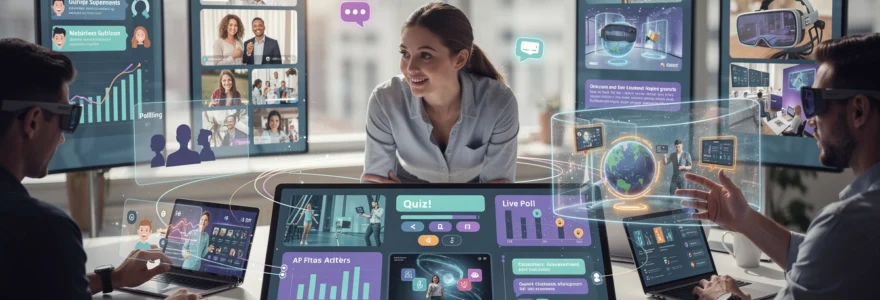
The digital landscape has fundamentally transformed how brands connect with their audiences, making interactive content a critical component of successful marketing strategies. Modern consumers no longer passively consume information; they crave engaging experiences that allow them to participate, explore, and personalise their interactions with brands. Interactive content generates 2x more conversions than passive content and increases user engagement by up to 70%, making it an essential tool for businesses seeking to capture attention in an increasingly crowded digital marketplace.
This shift towards interactive experiences reflects broader changes in consumer behaviour, where attention spans have shortened and expectations for personalised, immersive content have soared. Brands that successfully implement interactive content strategies see measurable improvements in key performance metrics, including dwell time, social sharing rates, and conversion percentages. The evolution from static content to dynamic, participatory experiences represents more than a trend—it’s a fundamental reimagining of how brands can create meaningful connections with their target audiences.
Quiz-based interactive formats for enhanced user engagement metrics
Quiz-based interactive formats represent one of the most versatile and effective approaches to audience engagement, consistently delivering impressive performance metrics across various industries. These formats tap into fundamental human psychology, leveraging curiosity, competition, and the desire for self-discovery to create compelling user experiences. Research indicates that interactive quizzes generate engagement rates 50% higher than static content, with users spending an average of 8.5 minutes interacting with well-designed quiz experiences.
The effectiveness of quiz-based content stems from its ability to provide immediate value to participants whilst simultaneously collecting valuable audience insights. This dual benefit creates a win-win scenario where users receive personalised results or entertainment value, whilst brands gather zero-party data that can inform future marketing strategies. The key to successful quiz implementation lies in balancing entertainment value with educational content, ensuring that participants feel genuinely engaged rather than subjected to thinly veiled market research.
Buzzfeed-style personality quizzes with dynamic result generation
BuzzFeed-style personality quizzes have revolutionised how brands approach audience engagement, demonstrating that entertainment-focused content can drive significant business outcomes. These quizzes work by creating emotional connections between participants and results, often incorporating elements of identity, aspiration, and social sharing. The most successful personality quizzes feature dynamic result generation algorithms that provide genuinely personalised outcomes based on user responses, rather than predetermined categories.
Modern personality quiz platforms utilise sophisticated branching logic to create millions of potential result combinations, ensuring that each participant receives truly unique feedback. This personalisation extends beyond simple categorisation to include tailored recommendations, product suggestions, or content pathways that align with individual preferences and behaviours. The implementation of conditional scoring algorithms allows brands to create nuanced assessment tools that adapt in real-time to user inputs.
Kahoot live polling integration for Real-Time audience participation
Kahoot’s live polling functionality transforms traditional presentation formats into dynamic, participatory experiences that encourage active audience engagement. This platform excels in educational and corporate environments, where real-time feedback and competitive elements drive participation rates significantly higher than conventional Q&A sessions. Live polling creates immediate feedback loops that allow presenters to adjust content delivery based on audience responses and comprehension levels.
The gamification elements inherent in Kahoot’s platform—including leaderboards, time pressure, and point systems—activate competitive instincts that maintain attention and encourage repeated participation. Integration capabilities allow seamless incorporation into existing presentation tools, whilst analytics dashboards provide detailed insights into participant responses, engagement duration, and knowledge retention rates.
Typeform conditional logic implementation for progressive profiling
Typeform’s conditional logic capabilities enable sophisticated progressive profiling strategies that gradually collect detailed audience information without overwhelming users with lengthy forms. This approach recognises that modern consumers resist extensive data collection but willingly share information when it feels natural and beneficial to their experience. Progressive profiling through conditional logic creates dynamic pathways that adapt questions based on previous responses.
The implementation of smart branching algorithms allows forms to evolve into personalised conversations rather than static questionnaires. This technology enables brands to collect comprehensive audience profiles across multiple touchpoints, building detailed customer personas without creating friction in the user experience. Advanced
implementations can connect responses from multiple sessions, progressively enriching customer profiles over time. For example, you might begin with a light, three-question quiz on content preferences, then, on a later visit, surface follow-up questions about budget, timelines, or decision-making roles. Because each interaction feels short and contextually relevant, completion rates remain high while your CRM gains increasingly granular, zero-party data that can power personalised email sequences, ad audiences, and product recommendations.
Interactive assessment tools with personalised scoring algorithms
Interactive assessment tools take quiz-based interactive content a step further by delivering prescriptive, benchmarked results rather than simple entertainment outcomes. These tools use personalised scoring algorithms to evaluate user inputs against predefined frameworks, industry benchmarks, or maturity models. For instance, a “digital maturity assessment” might calculate separate scores for strategy, technology, and culture, then surface tailored recommendations based on each dimension.
From a technical standpoint, assessment builders combine weighted scoring, conditional logic, and result mapping to produce nuanced outputs that feel more like a consultation than a quiz. Each answer contributes a certain number of points to one or more dimensions, and the algorithm aggregates these into an overall profile. This approach not only increases perceived value for the user—who receives actionable insights and next steps—but also provides you with high-intent signals that can feed lead-scoring models, nurture journeys, and sales playbooks.
When implementing these interactive assessment tools, it is essential to align scoring logic with real business outcomes and services you can genuinely deliver. Treat the assessment as the front end of a broader service pathway: the results should point users logically towards relevant guides, demos, or consultations. Done well, these tools can become cornerstone assets in your interactive content strategy, consistently attracting qualified leads and improving audience engagement metrics over the long term.
Gamification strategies using interactive video technology
As video continues to dominate digital channels, adding interactive layers transforms a traditionally passive format into a gamified, two-way experience. Interactive video technology allows you to embed decision points, hotspots, and calls to action that encourage viewers to click, explore, and influence what they see next. This shift from “lean-back” viewing to “lean-in” participation significantly increases watch time, completion rates, and downstream conversions.
Gamification strategies within interactive video might include branching storylines, timed challenges, knowledge checks, or reward mechanics such as badges and unlockable content. These elements tap into the same motivational drivers as quizzes—curiosity, mastery, and competition—while leveraging the emotional impact of moving images and sound. For brands seeking to increase audience engagement, interactive video offers a powerful way to turn educational or promotional content into immersive experiences that users remember and share.
Youtube interactive cards and end screen optimisation techniques
YouTube remains the world’s largest video platform, and its built-in interactive features provide accessible entry points into gamified video experiences. Interactive cards and end screens allow you to prompt viewers to take specific actions—such as watching another video, visiting a landing page, or completing a poll—at precisely the right moments. When strategically deployed, these elements can function like signposts in an interactive story, guiding users through a curated sequence rather than leaving them to the mercy of generic recommendations.
To optimise engagement, place cards at natural points of curiosity or transition within your narrative, such as after a teaser, a big reveal, or an explanation of a problem. Use concise, benefit-driven copy on the card titles so viewers immediately understand what they gain by clicking. On end screens, reduce choice overload by featuring a limited number of high-priority options—typically one key video, one playlist, and one website call to action—aligned with your primary goal, whether that is deeper education, lead capture, or product exploration.
Analytics within YouTube Studio allow you to measure card and end screen click-through rates, average view duration, and drop-off points. Treat these metrics as feedback loops for continuous optimisation: if viewers consistently abandon the video just before your end screen, consider adjusting pacing, shortening the content, or moving key interactions earlier. Over time, a well-structured interactive video journey can dramatically improve both audience retention and conversion metrics.
Vimeo interactive hotspot integration for clickable video elements
Vimeo’s interactive hotspot functionality enables you to embed clickable regions directly within your video frame, transforming on-screen objects into navigational or commercial triggers. Instead of relying solely on overlays outside the video player, hotspots let viewers click on a product, chart, or interface element to learn more, jump to a relevant chapter, or open a related resource. This approach mirrors real-world behaviour: when we see something interesting, our instinct is to “tap” it.
From an implementation standpoint, hotspots can be configured to reveal tooltips, link to URLs, or trigger in-video branching. For example, a software walkthrough might allow viewers to click different dashboard widgets to explore deeper explanations, while an e-commerce brand could make individual products in a lifestyle shoot shoppable with a single tap. These interactive elements reduce friction between interest and action, shortening the path from discovery to conversion.
Because Vimeo provides detailed interaction data for each hotspot, you can analyse which on-screen elements attract the most attention and adjust your creative assets accordingly. If specific products or topics consistently outperform others, you can prioritise them in future videos, landing pages, and campaigns. In this way, interactive hotspots not only increase in-session engagement but also inform your broader content and merchandising strategy.
H5P interactive video modules with embedded knowledge checks
H5P offers a robust open-source framework for creating interactive video modules, particularly effective in educational, onboarding, and training contexts. With H5P, you can embed knowledge checks directly into the playback experience, pausing the video at key points to ask multiple-choice questions, show drag-and-drop activities, or request short written responses. This transforms passive viewing into an active learning journey, reinforcing key concepts and improving retention.
Strategic placement of these knowledge checks is crucial for maintaining flow without overwhelming the viewer. Aim to insert interactions after introducing a key idea or completing a logical section, much like a chapter quiz in a textbook. Each checkpoint acts as a micro-gamification moment: users receive immediate feedback on their responses, which can include hints, explanations, or links to additional resources. This feedback loop keeps learners engaged and gives you granular data on where confusion or drop-offs occur.
H5P modules integrate with popular learning management systems and content management platforms, allowing you to track completion rates, question-level performance, and time spent on each interaction. These metrics help you refine both your video script and the interactive layer. Over time, you can build a library of high-performing interactive video content that not only educates but also drives measurable improvements in audience engagement and knowledge outcomes.
Wistia turnstile and call-to-action overlay implementation
Wistia’s Turnstile and call-to-action overlays provide powerful tools for turning video engagement into lead generation and conversions. Turnstile enables you to gate part of a video behind an email capture form, which can appear at the beginning, at a strategic midpoint, or near the end of the content. When used thoughtfully, this feature captures high-intent contacts without creating unnecessary friction, because viewers are already invested in the topic.
To maximise performance, align Turnstile placement with a moment of peak value—right after you have demonstrated expertise or teased a significant insight that the remainder of the video will explain. Keep form fields minimal to reduce abandonment, and connect submissions directly to your marketing automation platform for immediate follow-up. Meanwhile, Wistia’s in-player call-to-action overlays let you surface text or button prompts at specific timestamps, encouraging users to download resources, request demos, or visit product pages.
The combination of behavioural video analytics and interactive overlays gives you unprecedented visibility into how users move from engagement to action. You can see which segments of the audience watched beyond certain thresholds, who converted at which overlay, and how different versions of your interactive content perform in A/B tests. This data-driven feedback cycle turns your video library into a scalable acquisition engine rather than a static asset archive.
AR and VR content experiences for immersive brand storytelling
Augmented reality (AR) and virtual reality (VR) experiences represent the frontier of interactive content, enabling brands to create fully immersive environments where audiences can explore, manipulate, and co-create stories. Unlike traditional formats, which are constrained to a flat screen, AR and VR experiences place users at the centre of the narrative, turning them from observers into participants. This heightened sense of presence and agency can dramatically increase emotional impact and brand recall.
While high-end VR hardware once limited adoption, the rise of mobile AR, browser-based VR, and social media effects has lowered barriers to entry. Today, even simple AR filters or 360-degree videos can deliver memorable experiences that stand out in crowded feeds. For marketers, the strategic question is no longer “Should we use AR or VR?” but rather “How can we design immersive stories that meaningfully support our objectives and our audience’s needs?”
Instagram spark AR filter creation for social media engagement
Instagram’s Spark AR platform allows brands to design custom filters and effects that overlay digital elements onto users’ faces, bodies, or environments in real time. These AR filters are inherently interactive: users tilt their heads, tap the screen, or open their mouths to trigger different animations or transformations. Because filters are used within stories and Reels, they tap into existing user behaviour and can spread rapidly via social sharing.
Effective Spark AR filters usually follow one of three patterns: playful transformations (e.g., face masks or style swaps), branded try-ons (such as sunglasses or cosmetics), or simple mini-games where gestures trigger outcomes. When building a filter, keep performance and accessibility in mind—complex effects that slow down older devices will see lower usage and completion rates. Clear on-screen instructions and subtle visual cues help users understand how to interact without needing a tutorial.
From an analytics perspective, you can track impressions, captures, and shares to evaluate how your AR effect contributes to audience engagement. Filters that encourage user-generated content—such as challenges, “this or that” overlays, or personality-style effects—tend to drive the highest organic reach. Think of Spark AR filters as interactive campaign assets: they not only entertain but also embed your brand into the creative expressions of your community.
Facebook 360-degree video integration with interactive navigation
Facebook supports 360-degree video, allowing viewers to explore scenes by dragging, tilting, or moving their devices. This creates an immersive, panoramic experience that is particularly effective for travel, hospitality, real estate, and event-based storytelling. Instead of passively watching a fixed frame, users can look around as if they were physically present, deciding which details to focus on and in what order.
To increase interactivity, design your 360-degree scenes with clear focal points, guided audio narration, or subtle visual cues that encourage viewers to explore specific areas. You can also layer in hotspots or annotations that reveal additional information when the viewer dwells on a part of the scene for a certain duration. In effect, the user becomes their own camera operator, creating a personalised path through your content.
When publishing 360-degree videos on Facebook, pay attention to the initial frame and thumbnail, as these strongly influence click-through rates in feeds. Optimise file sizes for mobile viewing, which remains the dominant mode of consumption, and use Facebook’s insights to monitor engagement patterns such as average view time, interactions, and completion rates. This data helps you iterate on scene composition and narrative pacing to deliver more compelling immersive experiences.
Webxr browser-based virtual reality content development
WebXR is an emerging standard that enables VR and AR experiences to run directly in modern web browsers, without requiring dedicated app downloads or proprietary platforms. For marketers, this opens up the possibility of delivering interactive, room-scale environments or product visualisations via a simple URL that works across devices. A user can move from a social post or email link into an immersive showroom, training simulation, or virtual event space in just a few clicks.
Developing WebXR content typically involves 3D modelling, scene composition, and interaction design using frameworks such as A-Frame, Three.js, or Babylon.js. While this can sound complex, think of it as building a 3D website: instead of pages and buttons, you have rooms and objects; instead of clicks, you design gaze-based or controller-based interactions. To reduce friction, provide fallback experiences for non-VR devices, such as touch-based navigation on mobile or mouse-controlled views on desktop.
Because WebXR experiences can be instrumented with analytics, you can track how users move through virtual spaces, which objects they interact with, and where they drop off. These insights inform both UX improvements and commercial strategy—for example, which product configurations attract the most interest or which virtual booth layouts drive the longest dwell times. As hardware adoption grows, browser-based VR is likely to become a key pillar in advanced interactive content strategies.
Snapchat lens studio custom AR experience design
Snapchat’s Lens Studio provides another powerful avenue for creating interactive AR experiences, particularly for brands targeting younger demographics. Lenses can track faces, bodies, hands, and even surrounding environments, enabling rich interactions like gesture-controlled games, spatial effects, or multi-user experiences. Because Snapchat users are accustomed to playful, experimental content, brands have considerable creative freedom to surprise and delight.
When designing custom Lenses, start with a clear interaction concept—what should users do, and what feedback or reward do they receive? This could range from collecting virtual items by moving around their space to answering on-screen prompts via facial expressions. Keep the core mechanic simple and intuitive; if users must think too long about how to engage, they will swipe away. Sound design and haptic cues can further heighten immersion and make the experience more memorable.
Snapchat provides campaign-level analytics for sponsored Lenses, including play time, shares, and saves. Use these metrics to understand which creative elements resonate and which fall flat. Because Lenses often serve as the spark for user-generated stories and Snaps, their impact extends beyond immediate interactions, amplifying brand visibility through peer-to-peer sharing. In effect, you are handing your audience an interactive storytelling tool branded with your identity.
User-generated content campaigns with interactive submission portals
User-generated content (UGC) campaigns remain one of the most powerful ways to deepen engagement, as they transform your audience from passive consumers into active co-creators. By adding interactive submission portals—dedicated microsites, in-app experiences, or embedded widgets—you can streamline participation, standardise content formats, and collect richer metadata than simple hashtag campaigns allow. This structure enables you to curate, showcase, and repurpose submissions more effectively.
A well-designed submission portal guides users through each step of the contribution process with clear prompts, progress indicators, and real-time validation. For example, you might ask participants to upload a photo, record a short video, or write a brief story, then select categories or tags that help you organise entries. Gamification elements such as points, badges, or leaderboards can further incentivise participation and repeat contributions, especially in long-running community initiatives.
From a data and rights perspective, interactive portals also allow you to obtain explicit consent for content usage, collect contact information for follow-up, and enforce moderation guidelines. You can set up automated workflows that route submissions into review queues, trigger confirmation emails, or publish approved entries to galleries and social feeds. Over time, this creates a living archive of authentic voices and experiences that not only drive audience engagement but also provide social proof and creative fuel for future campaigns.
Real-time interactive webinar features and audience participation tools
Webinars have evolved from one-way broadcasts into highly interactive sessions that can rival in-person events for engagement and impact. Modern platforms offer a suite of real-time participation tools—live polls, Q&A panels, chat, breakout rooms, and interactive whiteboards—that turn attendees into collaborators. When used intentionally, these features keep attention high, surface valuable insights, and foster a sense of shared experience.
To design an interactive webinar, think in terms of segments rather than a single monologue. Alternate short content blocks with engagement moments: pose a poll to gauge current practices, ask attendees to submit questions or challenges, then address them live, or invite participants to contribute ideas to a shared board. This cadence mirrors an in-person workshop, where you move between presenting, discussing, and doing, and it dramatically reduces the risk of audience multitasking or drop-off.
Advanced webinar tools also support features like clickable handouts, on-screen CTAs, and in-session surveys, which can be used to guide participants towards next steps such as booking consultations, joining communities, or downloading resources. Post-event, you can analyse participation metrics—attendance duration, poll responses, chat activity—to segment your audience by engagement level and tailor follow-up sequences accordingly. In this way, interactive webinars become not just content pieces but high-signal events in your broader customer journey.
Conversational AI chatbots and interactive customer journey mapping
Conversational AI chatbots sit at the intersection of interactive content and customer experience, providing always-on, dialogue-driven interfaces that can guide users through complex journeys. Unlike static FAQs or menus, chatbots allow users to ask questions in natural language and receive contextual responses, turning navigation into a conversation. When thoughtfully designed, these systems reduce friction, personalise support, and surface the right interactive content at the right moment.
Interactive customer journey mapping with chatbots involves defining key intents, pathways, and decision points that align with your business goals. For example, a bot might detect whether a visitor is researching a problem, comparing solutions, or seeking post-purchase help, then dynamically adapt its prompts and content recommendations. Behind the scenes, this is enabled by intent classification, entity recognition, and conditional logic trees that route users down tailored flows—much like an advanced, conversational quiz.
To maximise engagement, give your chatbot a clear persona, concise language, and transparent boundaries about what it can and cannot do. Blend AI-driven responses with human handoffs for high-value or sensitive interactions, ensuring users never feel trapped in an automated loop. Analytics from chatbot interactions—common questions, drop-off points, sentiment trends—feed directly into your interactive content strategy, highlighting where new guides, videos, or tools could add value.
Over time, conversational AI can become a central orchestrator of your interactive ecosystem, connecting quizzes, videos, AR experiences, and webinars into a cohesive journey. Rather than forcing users to hunt for the right content, you invite them into an ongoing dialogue where each interaction informs the next. In a world where attention is scarce and expectations are high, this kind of responsive, personalised interaction is often what differentiates brands that merely publish content from those that truly engage their audiences.